Accessible stay planning: replace labels with facts
“Accessible” is not a complete description. One traveller may need a continuous step-free route; another may manage a few steps but need frequent seating; another may require clear visual information, a quiet room or predictable lighting. Historic cities add old thresholds, gradients and uneven surfaces to the usual accommodation questions. The most reliable plan translates an individual need into facts that a provider or venue can answer.
Describe the route, not the intention
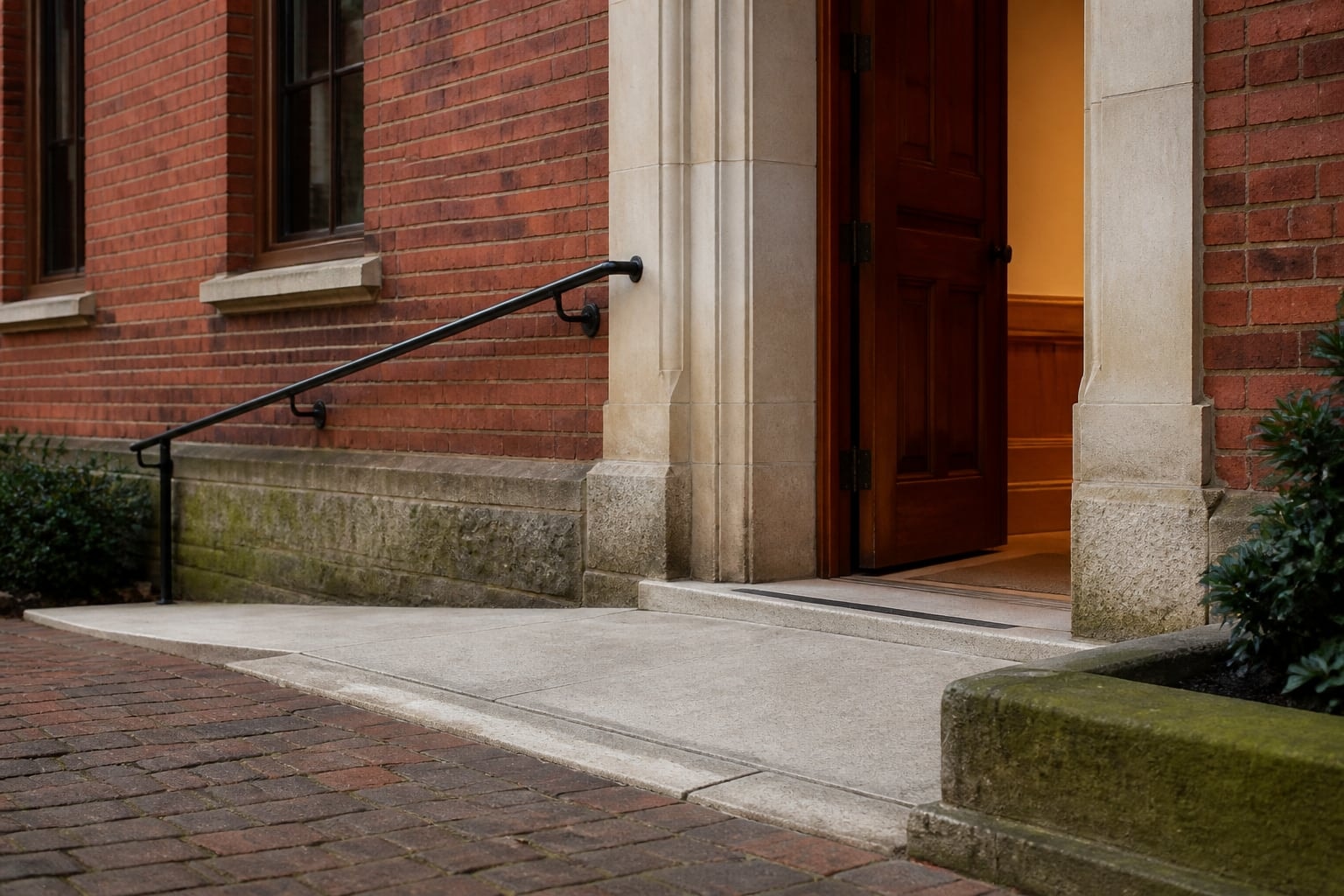
Ask for the sequence from pavement to room: entrance threshold, door type, corridor width, lift or stairs, final approach and bathroom layout. A statement that staff can help is not the same as an independent route. If assistance is acceptable, clarify what kind and when it is available. If it is not acceptable, say so plainly.
Government travel guidance recommends being specific, checking access to main areas and obtaining written confirmation. Its detailed accommodation questions cover doorways, lifts, bathrooms, equipment and assistance. Although framed for travel abroad, the practical method applies to any stay.
Match the room to the person
Room access is more than the entrance. Consider transfer space, bed height, the position of switches and sockets, bathroom turning room, shower arrangement and emergency information. For hearing or visual access, ask how alarms and after-hours instructions are communicated. For fatigue or pain, the distance from entrance or lift can matter as much as a technical room classification.
Photographs can support an answer but should not replace dimensions or a clear description. Confirm that an image shows the actual room category and current layout. Furniture can move; structural constraints usually cannot.
Include sensory conditions
Historic centres can be lively in the evening, and old buildings may transmit sound differently from modern structures. Ask whether the room faces a street, courtyard, plant area or internal corridor. Consider blackout provision, ventilation noise, strong fragrances and the predictability of shared spaces. A quiet arrival window may make the whole stay easier.
Connect transport and accommodation
A step-free room is of limited use if the arrival route contains an unexpected barrier. Check the current station assistance process, street gradients, crossings and the condition of any route on which the trip depends. Government guidance on disabled passenger rights gives the national context, while the relevant operator supplies current journey arrangements.
Plan heritage sites individually
Castle keeps, cathedral precincts and old civic buildings have different constraints. Avoid assuming that one accessible entrance means every level or feature is reachable. Check current official access statements, ask what can be experienced without stairs and identify seating and toilets. A partial route can still be worthwhile when expectations are clear.
Build alternatives around the same theme. If a tower route is unsuitable, exterior views, the river crossing and official interpretation may still explain defence and geography. If a long High Street walk is tiring, divide it into two short sections with a deliberate rest. The cathedral and castle guide is written to support observation from multiple positions, not one required route.
Keep confirmations together
Save answers with the date, room type and name of the service described, but do not publish personal details. Reconfirm critical arrangements shortly before travel. If circumstances change, update the plan rather than trying to preserve an itinerary that no longer fits.
Access planning benefits everyone
Specific information helps families with pushchairs, travellers recovering from injury, older visitors, people carrying luggage and anyone navigating an unfamiliar place in bad weather. The principle is simple: replace a broad promise with a route, a measurement, a time and an alternative. That is not excessive preparation. It is what makes choice real.