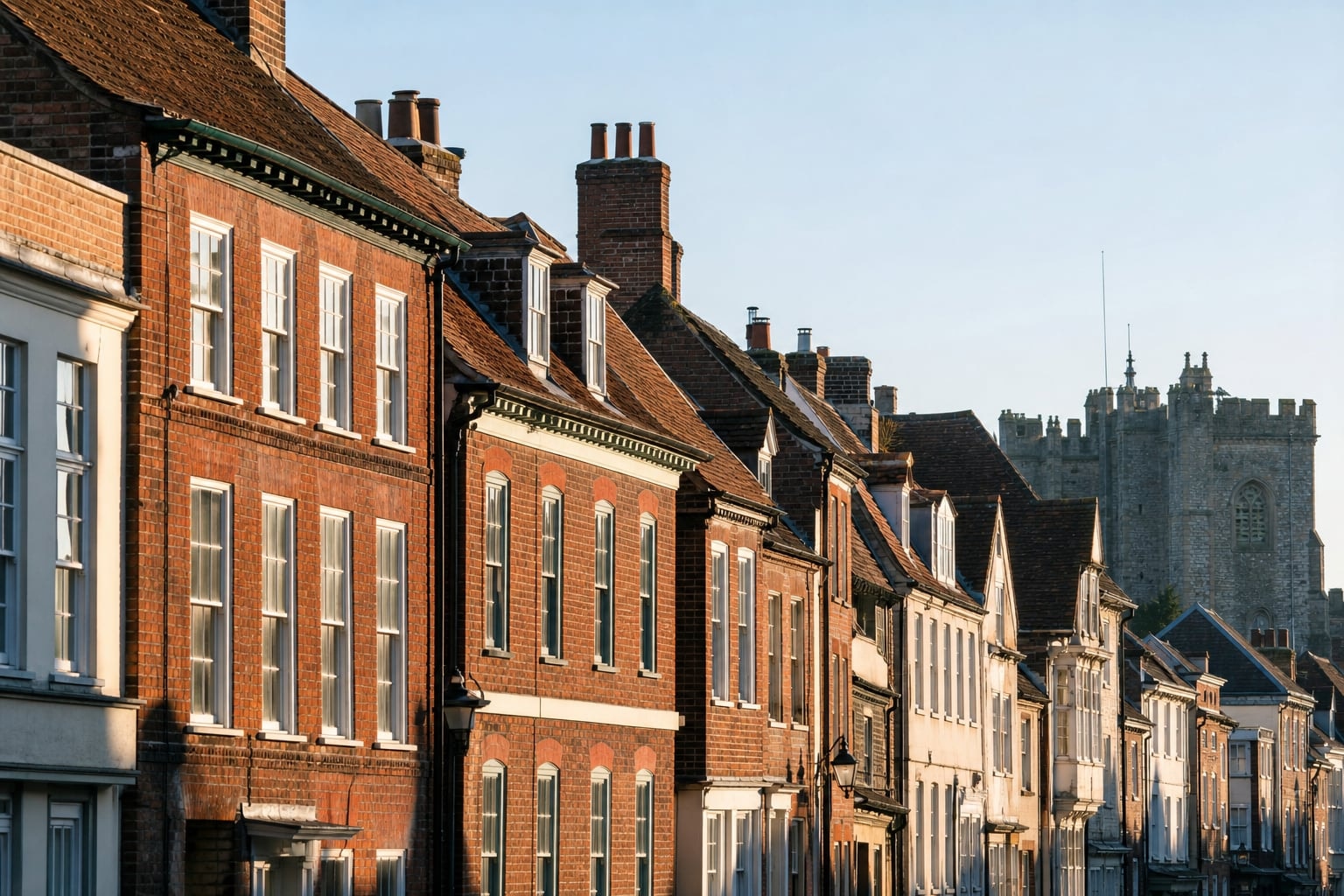
A slow walk along Rochester High Street
The best way to understand Rochester’s High Street is not to hunt for a single perfect historic view. It is to notice how many times the street has adapted while keeping its basic line. Ground floors respond quickly to trade; upper storeys, plot widths, party walls and roof shapes change more slowly. A deliberate walk lets those different speeds become visible.
Choose a direction, then look back
Walk the street once in a clear direction, but turn around regularly. Facades are designed to be seen from particular approaches, and the castle or cathedral may enter the view only when looking back. Side passages, changes in pavement width and small rises in the road can alter the composition within a few steps.
The local destination service’s overview of historic Rochester identifies the High Street as a core part of the visitor experience and links it to the major heritage sites. Use the official page for current attractions and events; use the walk itself to study the continuous urban fabric between them.
Read above the shopfront
At eye level, signs, displays and doors compete for attention. Lift your gaze to the first and second floors. Look for repeated window spacing, changes in brick bond, patched openings and rooflines that reveal older building divisions. A broad modern frontage may conceal two narrow historical plots. Conversely, matching paint can make separate structures appear as one.
Avoid making confident dates from style alone. Features are copied, moved and replaced. If a particular building matters, consult its official list entry or a local collection rather than relying on appearance. The purpose of visual reading is to form better questions, not to turn every observation into a claim.
Use pauses as part of the route
A heritage walk becomes tiring when every pause is treated as failure. Build in places to sit or stand out of the main pedestrian flow. A pause is when details connect: the relationship between upper facades, the change in street level, or the sound of traffic compared with quieter lanes. It also reduces pressure on narrow pavements and shop entrances.
Visitors using mobility aids, managing fatigue or travelling with sensory sensitivities should check current route and facility information. Historic streets can combine dropped kerbs with uneven surfaces, and busy event days can change how usable a familiar route feels. The access planning page offers a question-led method rather than promising that one route suits everyone.
Notice the working street
The High Street is not an outdoor museum. People work, shop, live above premises, make deliveries and move through it on ordinary errands. Respect that daily use by keeping doorways clear, photographing architecture rather than people, and avoiding long stops in narrow places. Responsible attention produces a more accurate understanding than treating the street as scenery.
Connect the street to river and monuments
At one end, the river crossing explains movement; nearby high ground explains defensive and religious concentration. The commercial street joins those forces to everyday exchange. Follow the river notes after the High Street and the change in scale is immediate: enclosed facades give way to long views, weather and water.
Keep a field-note method
Record three things rather than dozens: one material change, one altered opening and one view that explains the street’s shape. Sketching a roofline or writing a sentence often reveals more than taking many photographs. Later, compare the note with an official heritage record. The result is a walk that remains specific without pretending to be a building survey.
Choose a quieter window
Early and late light can make facade depth easier to see, but the working needs of the street come first. Avoid delivery activity, events or poor visibility when they make stopping awkward. A shorter attentive walk is better than insisting on a complete route at the wrong time.